Why You Should Never Leave Too Much Empty Space in Your Freezer
Owning a home is not just about the mortgage, the repairs, or the big-ticket items. It is also about the small habits that make your house run better day to day.
One of those habits is how you use your freezer.
Many homeowners leave extra freezer space open because they believe it keeps things simple. On the surface, that makes sense. But in many cases, too much space in your freezer can work against you.
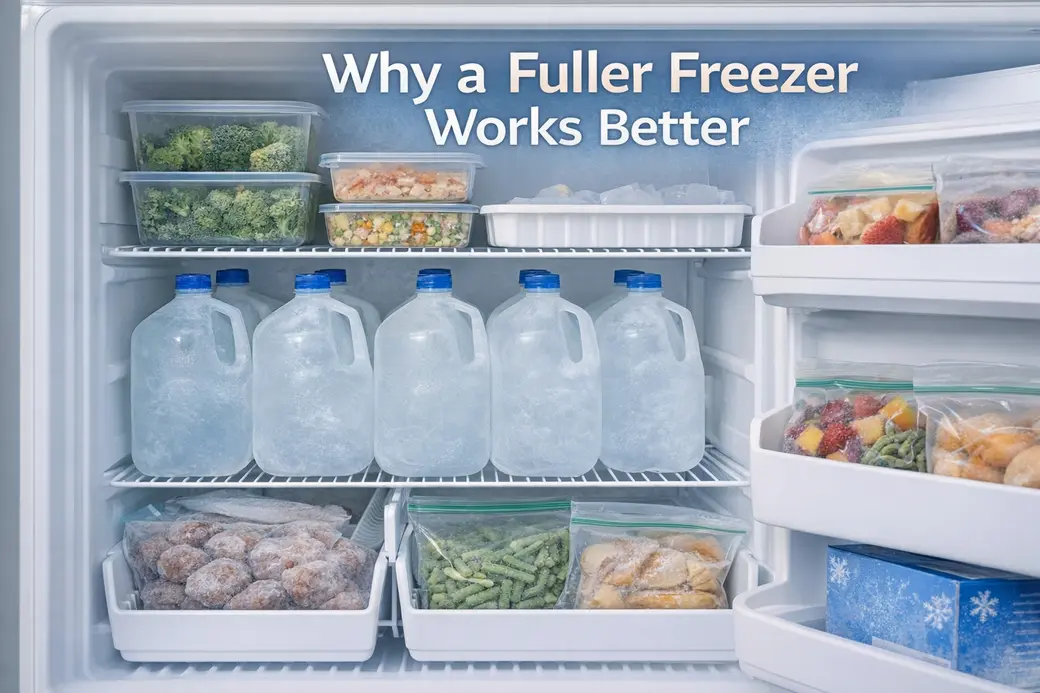
That is why some people fill unused freezer space with gallon jugs of water and let them freeze solid.
It may look strange at first. It is not.
A fuller freezer can help improve efficiency, reduce temperature fluctuations, protect your food for longer during outages, and provide a practical backup supply of ice or water when needed.
This is not about stuffing your freezer with random clutter. It is about utilizing space more intelligently.
Why Empty Space in a Freezer Can Be a Problem
Every time you open your freezer door, warm air enters.
If your freezer has a lot of open space, there is more room for warm air to move in and circulate. That means your freezer has to work harder to bring the temperature back down.
That extra work does not happen once. It happens over and over.
The more often warm air replaces cold air, the greater the strain on the system.
That is why space matters.
A freezer that contains frozen mass inside it holds cold better than a freezer filled with open air.
Why Frozen Water Helps
Water holds temperature well. Once frozen, it acts like thermal mass.
That means frozen jugs of water help stabilize the temperature inside the freezer. They do not cool the freezer by magic. They help the freezer maintain a consistent cold temperature.
That matters for a few reasons:
- Less temperature fluctuation
- Less stress after door openings
- Better cold retention during short interruptions
- More stable storage conditions for food
In simple terms, frozen water helps your freezer recover more quickly and stay colder for longer.
How This Can Help Lower Energy Waste
A freezer still uses electricity whether it is full or not. But when there is too much open space, the appliance often has to deal with bigger temperature swings.
That can mean more work after the door opens and more effort to cool newly entered warm air.
A properly filled freezer helps reduce that problem.
This does not mean you should overpack it so tightly that airflow is blocked. That is a mistake, too. The goal is balance.
You want enough frozen mass to help hold the temperature without cramming the freezer so full that air cannot circulate.
Why It Can Help During a Power Outage
This is one of the most significant practical benefits, particularly for homeowners in Florida and other areas prone to storms.
If the power goes out, a fuller freezer usually stays cold longer than a mostly empty one.
That is because the frozen items inside the freezer help keep each other cold. A freezer filled with frozen water jugs has more cold mass working in your favor.
That extra time can matter.
It can help protect food, reduce spoilage, and buy you more time to decide what needs to be used first if the outage lasts.
For families who face hurricane season, summer storms, or power outages, this is a smart and simple preparedness measure.
Why Homeowners Like the Water Jug Method
Using gallon jugs of water is one of the easiest ways to fill unused freezer space with a practical item.
It gives you:
- frozen mass to help stabilize freezer temperature
- extra ice for coolers or emergencies
- water that can be used later if needed
- a simple way to fill gaps without wasting space
It also helps if you do not keep a heavily stocked freezer all the time.
Not everyone buys in bulk. Not every family keeps a packed freezer. Water jugs give you a low-cost way to make the space work better anyway.
A Smarter Way to Do It
If you want to use this method, keep it simple.
Fill sturdy containers or jugs with water, but do not fill them to the top. Water expands when it freezes, so leave room for that expansion.
Then place them in unused areas of the freezer where they will not block drawers, vents, or the door from closing properly.
You are not trying to create a wall of ice for the sake of it. You are trying to reduce wasted air space practically.
What Not to Do
This is where people get it wrong.
A fuller freezer can help, but that does not mean more is always better.
Avoid these mistakes:
Do not overfill the freezer
If air cannot move well, performance can suffer.
Do not block vents
Your freezer requires airflow to function properly.
Do not use weak containers
Cheap or overfilled containers can crack when frozen.
Do not treat this like a substitute for maintenance
A freezer full of ice jugs will not fix dirty coils, bad seals, or an aging appliance.
The idea works best when the appliance is already in decent condition.
Why This Matters More for Busy Families
Busy households often open the freezer frequently.
Kids grab snacks. Parents pull dinner ingredients. People open the freezer, close it, then open it again five minutes later.
Repeated door traffic creates temperature fluctuations.
A freezer with more frozen mass inside tends to handle that better than one with too much empty air.
While this tip may seem small, it can actually be more useful in high-use households than in homes where the freezer is rarely used.
A Good Homeowner Habit, Not a Hacky Gimmick
Many viral tips online are either overhyped or not worth the effort.
This one is different.
It is simple, cheap, and practical.
You are not buying a new appliance. You are not installing anything. You are just using the freezer space more intelligently.
That is the kind of homeowner habit that actually makes sense.
It is the same mindset behind changing filters on time, checking weather seals, or knowing where your water shutoff valve is. Small things add up.
When This Tip Makes the Most Sense
This works especially well if:
- Your freezer is usually half empty
- You live in an area with storm-related outages
- You want better cold retention
- You want backup ice or water on hand
- Your household opens the freezer often
If your freezer is already well stocked all the time, you may not need extra water jugs. The principle is the same either way. Frozen mass helps hold cold better than empty air.
Final Thoughts
Too much space in your freezer is not just wasted room. It can also result in less temperature stability, increased energy waste, and reduced protection during an outage.
That is why keeping your freezer reasonably full makes sense.
For some households, that means storing more frozen food. For others, it means using gallon jugs of frozen water to take up unused space in a practical way.
It is not complicated.
It is just smart homeownership.
If you want your house to run more efficiently, you don't always need a major upgrade. Sometimes you need a better habit.
FAQs
Why should I keep my freezer full?
A fuller freezer holds cold more effectively than a freezer with too much open air, which can help reduce temperature swings and improve performance.
Do gallon jugs of frozen water really help?
Yes. Frozen water adds thermal mass, which helps the freezer stay colder for longer and recover more quickly after the door is opened.
Can this help during a power outage?
Yes. A fuller freezer usually keeps food cold longer during an outage because the frozen contents help maintain lower temperatures.
Will this lower my electric bill?
It can help reduce wasted cooling effort, especially in a freezer with ample space, although the impact depends on usage and appliance condition.
Can I overfill the freezer?
Yes. You still need airflow. The goal is to reduce wasted space, not pack the freezer so tightly that it cannot circulate air properly.
* Owning a home is about more than buying it. It is about managing it well. Small habits like this can save money, reduce waste, and make your home work better when it matters most.