If you have driven through Lakeland, Davenport, Winter Haven, or the fast-growing stretches of the I-4 corridor lately, you have probably noticed a major shift in the local housing landscape: more neighborhoods of detached homes that were built to be rented, not sold. These Build-to-Rent, or BTR, communities have become a visible part of Florida’s housing pipeline, and Florida is one of the national leaders in this category.
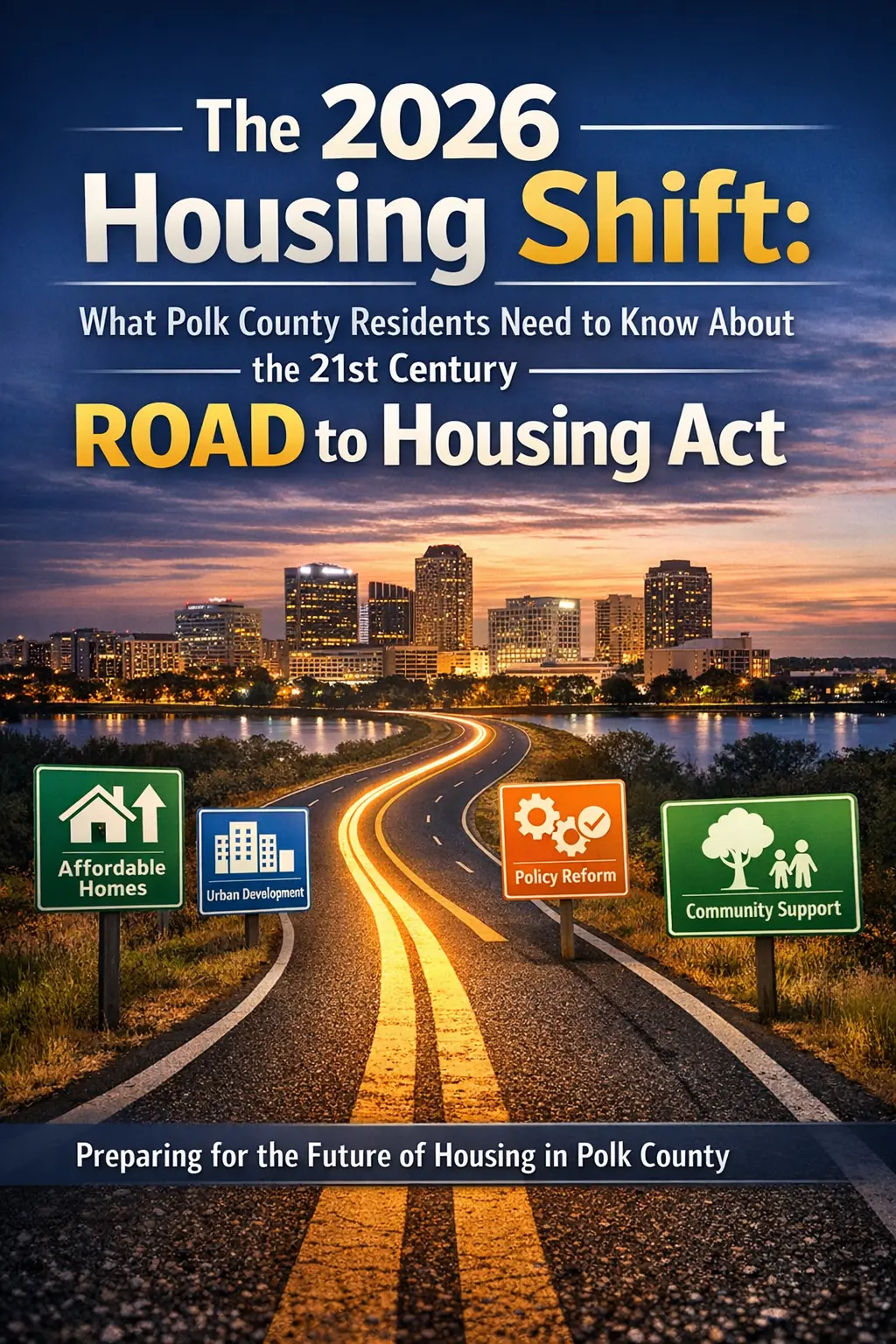
That rapid growth is exactly why the Senate’s recent passage of the 21st Century ROAD to Housing Act matters so much here. On March 12, 2026, the U.S. Senate passed the bipartisan bill. One point matters for accuracy: it is not yet final law. The House still must act, and the legislation could still change before any provisions take effect. For Polk County residents, that means this is not a done deal yet, but it is a serious federal housing proposal that could reshape the local market if enacted.
Why This Matters in Polk County Right Now
Polk County is not having a theoretical housing conversation. It is living a real one. The county continues to face affordability pressure as population growth, housing demand, and development activity reshape local communities. That is part of the reason Build-to-Rent neighborhoods have expanded so quickly across Central Florida.
For many households, these communities filled a gap between a traditional apartment and a home purchase. A renter could get a yard, garage, and more living space without needing a down payment or mortgage approval. In a market where buying has become harder, that product served families who were not ready to buy yet but needed more space than an apartment could offer. For readers comparing lifestyle, commute, and community options, this topic also connects naturally with your article on Best Places to Live in Lakeland, Davenport, and Winter Haven.
What Is the 21st Century ROAD to Housing Act?
The 21st Century ROAD to Housing Act is a broad federal housing package aimed at affordability, housing supply, financing modernization, and regulatory reform. For Polk County readers, the most important parts are not the technical federal housing finance pieces. The provisions that could hit closest to home are these:
-
Restrictions on large institutional investors in single-family housing
-
A seven-year disposition requirement tied to some Build-to-Rent activity
-
Renter-friendly pathways to ownership, including rent reporting and first-purchase rights
-
Broader affordability measures, including expanded eligibility for some homeownership assistance
How the Bill Targets Large Institutional Investors
One of the most talked-about parts of the bill is the section often described as “Homes are for People, Not Corporations.” Under the Senate version, a “large institutional investor” is generally an entity that directly or indirectly owns at least 350 single-family homes.
Supporters argue this would help reduce corporate competition with ordinary buyers in resale neighborhoods. That message is likely to resonate in Polk County, where many first-time buyers already feel priced out by higher mortgage costs, limited savings, and strong demand. If large firms are limited in how aggressively they can expand in single-family housing, more homes may stay accessible to local households and smaller investors.
At the same time, the policy is more nuanced than a simple ban. Analysts have pointed out that the bill includes exemptions, which means the final market impact would depend heavily on implementation details and what changes, if any, happen in the House.
The 7-Year Build-to-Rent Rule Explained
This is the provision most likely to matter in high-growth parts of Polk County.
Under the Senate bill, large institutional investors can still participate in some new single-family rental development, but in important cases, they would need to sell those homes to individual homeowners after seven years rather than hold them indefinitely as long-term rental assets.
Supporters say that could create a future pipeline of homes for sale, including lightly used houses in newer neighborhoods. In theory, that could benefit households that are not ready to buy today but may be ready in several years.
The concern is that Build-to-Rent economics were largely built around long-term hold strategies. If major investors cannot hold communities for decades, some developers and lenders may decide not to fund as many projects. That matters in places like Davenport, Lakeland, and other fast-growing parts of Polk County, where family-sized rental housing remains in demand.
Could Rents Rise in Lakeland, Davenport, and the I-4 Corridor?
That is the question Polk County renters care about most, and the honest answer is: Possibly, YES, if the policy reduces future supply.
Polk County still needs significant housing growth to keep up with expected demand. If fewer Build-to-Rent communities get funded in Davenport, Lakeland, Haines City, and nearby growth areas, households that would have rented a detached home may be pushed back into apartments, older single-family rentals, or a tighter resale market.
In that scenario, rent pressure could increase, especially for middle-income households that earn too much for many subsidy programs but still cannot comfortably buy. Supporters of the bill would argue that the goal is not to eliminate rental options, but to keep more single-family homes on a path toward ownership.
For Polk residents, the practical takeaway is this: If enacted, the bill could improve future buying opportunities while also creating short-term uncertainty in the rental pipeline.
A New Path to Homeownership for Renters
One of the bill’s more consumer-friendly features is the effort to create a smoother path from renting to owning.
Under the Senate approach, investors using this structure would provide positive rent payment reporting for tenants who opt in, and they would give renters a right of first refusal plus a 30-day first-look period if the property is sold.
For Polk County renters, this matters because mortgage readiness is often blocked by two issues: credit profile and upfront cash. If on-time rent payments help strengthen credit history, some households may become finance-ready faster. If a renter also gets the first chance to buy the home they already live in, that reduces the disruption and competition that usually come with entering the market cold.
The bill also includes broader affordability measures beyond investor rules, including expanded eligibility for certain homeownership assistance programs and housing-related support for veterans. Buyers who are starting that journey may also benefit from reading your Polk County First-Time Homebuyer Guide for 2026 as a next step after this article.
What About Amenities, Maintenance, and Community Management?
This is where the local conversation becomes practical.
Many Build-to-Rent communities are leased and managed as a unified product. Residents often expect coordinated landscaping, amenity upkeep, leasing support, and standardized maintenance. If a neighborhood gradually shifts from one corporate owner to many individual owners, those systems may need to evolve.
In some communities, that could mean a stronger homeowners’ association structure. In others, it could create friction over reserve funding, shared amenities, or service standards. This is not necessarily a flaw in the bill itself, but it is a real implementation question that future communities may have to solve.
For renters and buyers in Polk County, that means asking better questions before signing a lease or contract in a Build-to-Rent neighborhood:
-
Who owns the homes?
-
Is the community meant to remain rental long-term?
-
Is there a future sale plan?
-
How are amenities funded and maintained?
-
What happens if homes begin transitioning to individual ownership?
What Polk County Residents Should Do in 2026
If you rent in a Build-to-Rent community, pay attention to who owns your neighborhood and whether your lease includes any information about purchase opportunities, rent reporting, or future sales. If the federal bill advances further, those details may become more valuable.
If you want to buy in the next 12 months, do not assume this bill will suddenly make homes cheaper or easier to win. It has not become final law, and even if enacted, market effects would take time. What you can do now is work on credit, savings, loan strategy, and neighborhood selection in Lakeland, Davenport, Winter Haven, and nearby Polk communities. For a practical next step, link readers to your Polk County First-Time Homebuyer Guide for 2026.
If you are still deciding where to live based on commute, community feel, schools, or growth potential, this is also a smart place to direct readers to Best Places to Live in Lakeland, Davenport, and Winter Haven.
If you are a local landlord or small investor, watch the distinction between large institutional firms and smaller operators. The political message of the bill is aimed at scale and concentration, not every independent property owner.
Final Take: Opportunity and Risk in the Polk County Market
For Polk County, the 2026 housing shift is best understood as a tradeoff debate.
On one side, the Senate bill tries to expand affordability, reduce corporate pressure in the single-family market, support renters who want to become owners, and widen access to some federal homeownership tools. On the other side, analysts warn that the same framework could discourage future Build-to-Rent construction and tighten rental supply in fast-growth suburban markets like those along the I-4 corridor.
For residents of Lakeland, Davenport, and the rest of Polk County, this is not just a Washington policy story. It is a local housing story with real implications for rent levels, inventory, neighborhood development, and the path from leasing to ownership.
The most accurate conclusion today is this: the bill could reshape Central Florida housing if it becomes law, but the final outcome will depend on what the House does next and how the market responds.
FAQs About the 2026 Housing Shift in Polk County
Has the 21st Century ROAD to Housing Act already become law?
No. The Senate passed it on March 12, 2026, but the House still must act before it can become federal law.
What is a Build-to-Rent community?
A Build-to-Rent community is a neighborhood of newly built homes designed primarily for leasing rather than for immediate individual sale.
Would the bill ban all corporations from owning rental homes?
No. The Senate version targets large institutional investors that own at least 350 single-family homes, and it also includes exemptions.
Could Polk County rents go up if the bill moves forward?
They could if the policy discourages future rental construction and reduces supply, especially in fast-growth areas.
How could renters benefit?
Some provisions would encourage positive rent reporting to credit bureaus and give renters a first opportunity to buy their home if it is sold.