
Clear the Chaos With This Easy DIY Tote Storage Rack
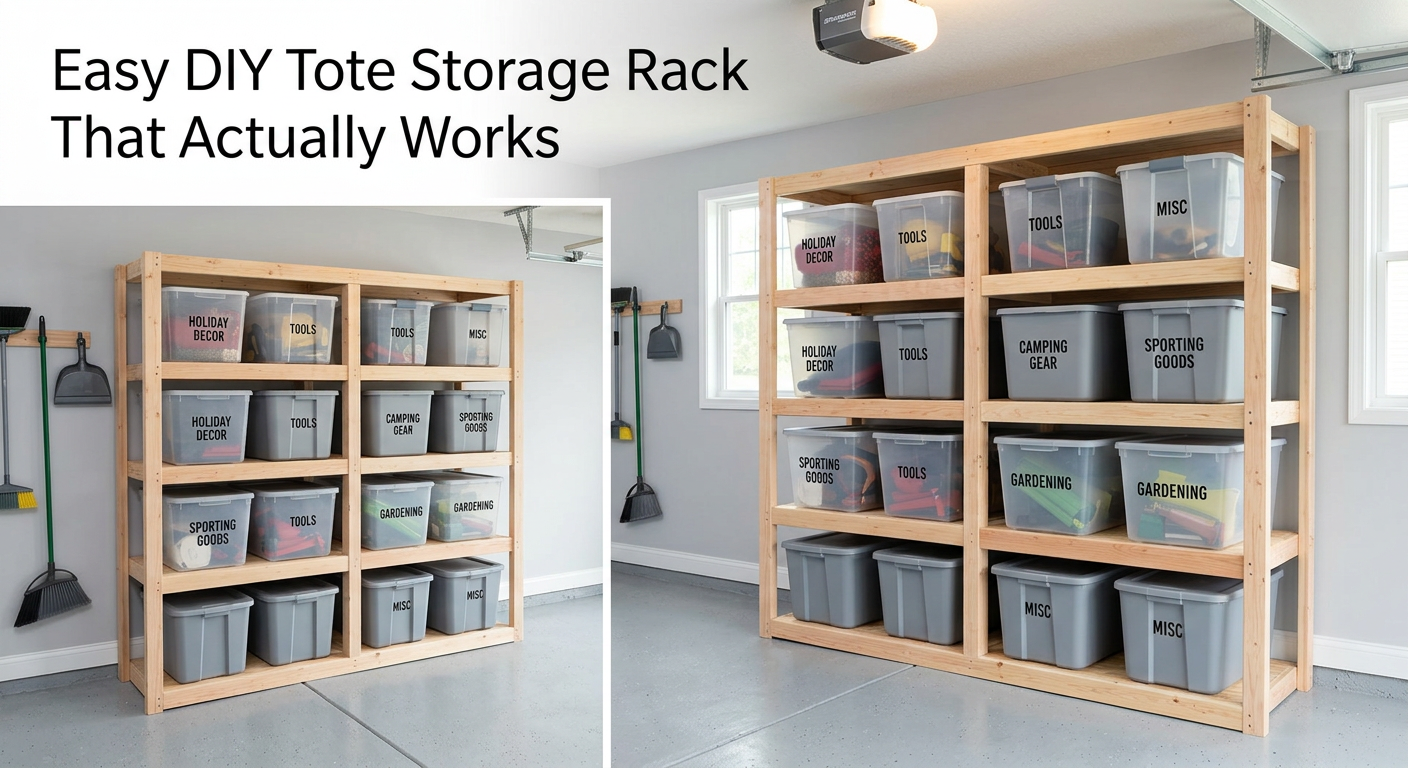
If your garage, storage room, or utility space is starting to look like a stack of random plastic bins and frustration, this project is worth your time. A good tote storage rack does two things right away. It gets bins off the floor, and it makes the space easier to use. No more digging through towers of totes. No more dragging out three bins just to get to the one in the back.
The key is not just building the rack. The key is planning it the right way before you ever cut a board.
I like DIY projects that are practical, clean, and actually solve a problem. This is one of those projects.
Why This Tote Rack Works:
This style of rack works because the totes slide on rails instead of sitting on full shelves. That saves space, uses less material, and makes everything easier to grab.
It is a smart option if you want to organize:
-
Holiday decorations
-
Tools and hardware
-
Seasonal clothes
-
Camping gear
-
Sports equipment
-
Overflow household storage
If you build it right, it is strong, simple, and a whole lot better than stacked bins in a corner.
Step 1: Measure the Space First
Before you buy lumber, measure the wall where the rack is going.
You need to know:
-
Total width
-
Total height
-
How deep can the rack be
-
Anything in the way, like plumbing, outlets, or HVAC lines
The space you have available will control the size of the entire project. If the rack is going in a tight room, garage corner, or utility area, those measurements matter from the start.
Step 2: Measure the Totes
This part gets skipped way too often.
Do not just read the tote label and assume it tells you what you need. Measure the actual bins with the lids on.
You need:
-
Height
-
Width under the top lip
-
Full length
That lip measurement is important because it is the part riding on the tote rails.
If you are working with more than one tote size, measure each one separately.
Step 3: Count How Many Totes You Need to Store
Now figure out the actual number of bins the rack needs to hold.
That will help you decide:
-
How many sections to build
-
How many levels do you need
-
whether the rack should have equal spacing or different sections for different tote sizes
If you have small and large totes mixed together, split the rack into sections that fit each size instead of forcing one layout to do everything.
Step 4: Plan the Layout
Once you know the wall size and tote sizes, sketch the layout.
That plan should answer:
-
How many vertical bays do you need
-
How many rows will fit
-
Where the big totes go
-
Where the smaller totes go
A clean layout makes the final build look better and work better.
If you want a more uniform look, you can keep the tote rail heights consistent even if the totes are different sizes. That is not required, but it can make the rack feel cleaner and more organized.
Step 5: Cut the 2x4s
Once the plan is solid, cut your 2x4 parts.
This usually includes:
-
Outside uprights
-
Inside uprights
-
Top and bottom plates
-
Tote rails
-
Braces
-
Ledger board for wall anchoring
After cutting, stack and organize each part by type. That makes assembly faster and keeps you from sorting through a pile of lumber every five minutes.
Step 6: Sand and Finish the Wood if You Want
This step is optional, but it can make the finished rack look a lot better.
If you want a cleaner look:
-
Sand rough edges
-
Smooth splinters
-
Stain the wood
-
Add a wipe-on polyurethane finish
This is not required for the function. It is more about appearance and making the rack feel more finished.
Step 7: Build the Front and Back Frames
Start by building two large rectangles:
-
One for the front
-
One for the back
Lay out the uprights with the top and bottom plates on a flat surface. Use clamps and a square to keep the corners at 90 degrees.
Pre-drill the screw holes, then drive screws through the plates into the uprights.
Take your time here. If the frames are not square, the whole rack will fight you later.
Step 8: Connect the Frames
Once the front and back frames are assembled, connect them using four tote rails at the corners.
This starts turning the project into a real structure.
Clamp the rails in place, pre-drill, and screw them in securely. Then flip the structure carefully and continue fastening the second side.
This part is easier with a helper.
Step 9: Add Braces for Strength
Now add the 45-degree braces to help prevent twisting and racking.
These braces matter more than people think. Without them, the rack can wobble during assembly and may not stay square.
If the frame is slightly out of square, correct it before locking the braces in place.
Step 10: Install the Inside Uprights and Center Beams
The inside uprights and center beams create the support points for the tote rails.
Attach them carefully and keep everything square and parallel.
If a 2x4 has a little warp in it, clamp it into position and work the screws in gradually. That usually pulls the piece into line.
The goal here is simple:
Make sure every tote rail has a solid support point, and every section stays aligned.
Step 11: Attach the Tote Rails
This is where the project really starts to come together.
The tote rails hold the tote lip and allow the bins to slide in and out. You want enough clearance so the tote moves easily, but not so much space that it feels sloppy.
Start from the top and work your way down. Keep every rail level from front to back and matched with the rail across from it.
Before you lock in every rail, test-fit a tote. That one step can save you a lot of frustration later.
Step 12: Anchor the Rack to the Wall
Do not skip this.
If the rack is holding full totes, it needs to be anchored properly. Add a ledger board across the back and fasten the rack to the wall using the correct anchors for the surface.
That may mean:
-
Screws into studs
-
Masonry anchors into the block
-
Concrete fasteners for solid walls
A loaded tote rack has real weight. Anchor it like it matters.
Why This Project Is Worth It
This rack is one of those DIY builds that gives you an immediate payoff.
You get:
-
Better storage
-
More floor space
-
Easier access to bins
-
A cleaner-looking room
-
Less clutter and less frustration
It is not complicated, but it does reward good planning.
Final Takeaway
If you want to clear the chaos, this easy DIY tote storage rack actually works.
The biggest mistake is rushing into the build without planning the size, tote spacing, and layout first. Measure the wall. Measure the bins. Build around what you actually need. Then put it together strongly and anchor it the right way.
That is how you end up with a storage system that looks good, works well, and lasts.
At Honesty Is Realty, I like practical solutions that make a home work better. Honesty is reality. Whether you are organizing your garage, improving a utility room, or getting a property cleaner and more functional, smart storage always helps.
FAQs:
What should I measure before building a tote storage rack?
Measure the wall space first, then measure each tote’s height, width under the lip, and full length.
Why use rails instead of shelves for plastic totes?
Rails save material, use space efficiently, and make it easier to slide bins in and out.
Should a DIY tote rack be anchored to the wall?
Yes. If the rack is tall or holding heavy totes, anchoring it adds safety and stability.
What can I store in plastic totes?
Plastic totes work well for seasonal decorations, tools, clothes, camping gear, and household storage. Avoid storing food, perishables, hazardous materials, or heat-sensitive items like candles.
About Me:
Nelson Perez | Veteran & MRP Realtor® in Central Florida (Polk + Osceola)
I’m Nelson Perez, a U.S. Veteran and MRP-certified Realtor® with LPT Realty, based in Davenport, Florida. With 30+ years of construction experience and a straight-shooting negotiation style, I help buyers, sellers, and investors across Central Florida—especially Polk County and Osceola County. “Honesty is reality.” That is how I operate: clear advice, clean communication, and strategies that protect your money.
* Need a home with better storage, more function, or room to make your projects work? Let’s talk about what to look for in a Central Florida property that fits the way you actually live.
Categories
- All Blogs (92)
- 911 (2)
- April Awareness Days (1)
- buyer (31)
- Central Florida Home Buyers (2)
- Davenport (2)
- florida market (11)
- FSBO (2)
- Home Buying Guides (7)
- Home Maintenance, (6)
- Homeownership (1)
- Knowlege is Power When it comes to todays market (2)
- Military Families (6)
- Personal Finance," "Credit Score," "Money Tips (1)
- Real Estate Market News (8)
- renting (2)
- seller (9)
Recent Posts










MRP Realtor® | Veteran Real Estate Advisor | License ID: SL3558188
+1(954) 418-2463 | nperez@axenrealty.com