
Migration Trends: How Job Growth and Affordability Support Long-Term Property Values
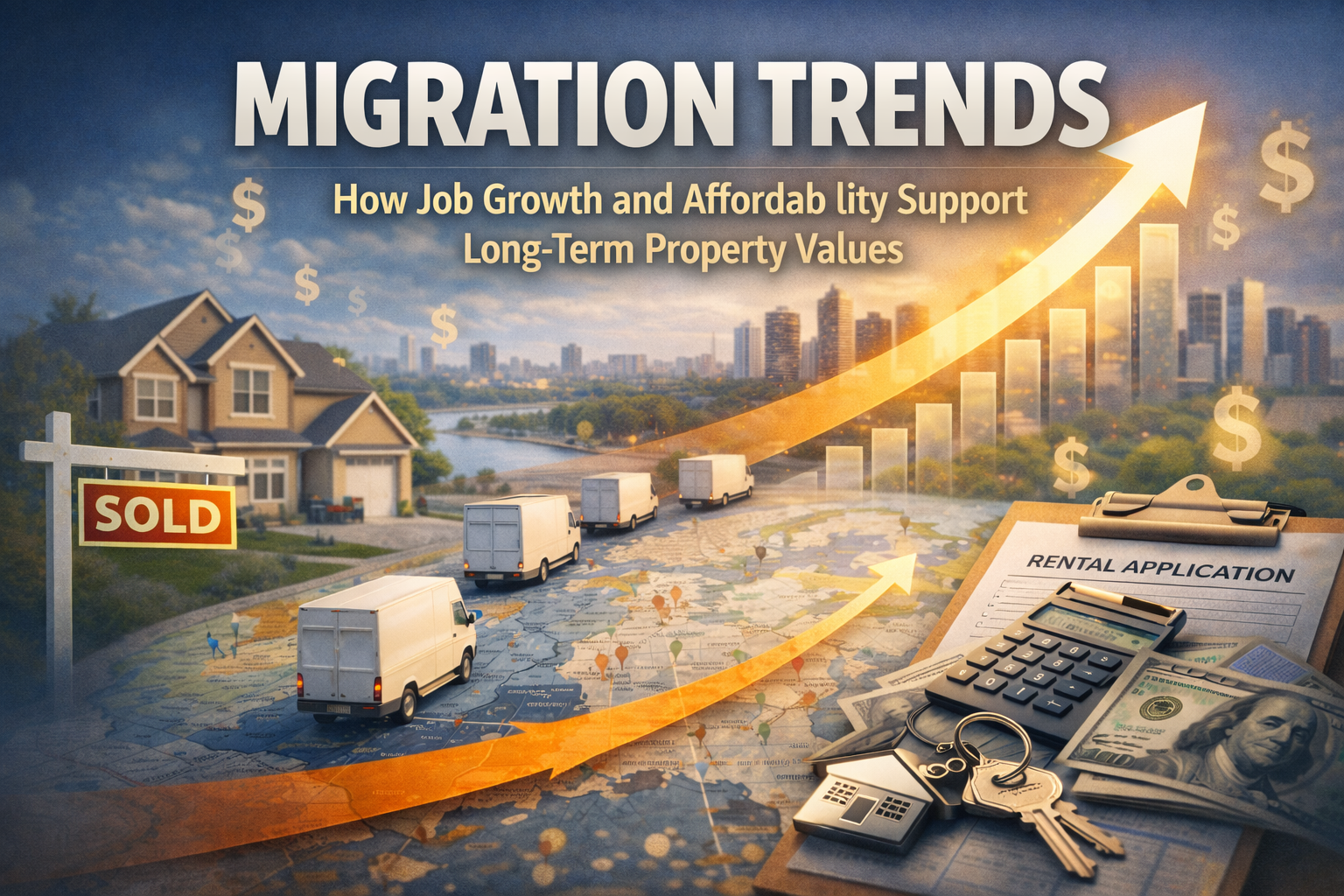
Migration trends continue to play a major role in shaping the real estate market. In many growing regions, strong job growth and relative affordability are attracting new residents from higher-cost, higher-tax states. That movement is not just increasing population. It is also helping support housing demand, neighborhood growth, and long-term property values.
For buyers, sellers, and investors, this matters. Migration is one of the clearest signals of where demand may remain strong over time. When people move to an area for better employment opportunities, lower living costs, and improved lifestyle value, the housing market often benefits.
Why Migration Trends Matter in Real Estate
Real estate values are closely tied to demand. When more people move into a market, they need places to live. Some rent first. Others buy immediately. Over time, this added demand can strengthen occupancy, absorb inventory, and help stabilize or increase home values.
Migration trends matter even more when they are driven by durable factors. Temporary demand spikes are one thing. But when relocation is supported by job creation, business expansion, and affordability, the trend can have a longer-lasting effect on the market.
That is why so many real estate professionals watch migration patterns closely. They often reveal where economic momentum and housing demand are moving together.
Job Growth Continues to Drive Relocation
One of the biggest reasons people move is opportunity. When a market creates jobs across industries such as healthcare, technology, logistics, education, construction, or finance, it becomes more attractive to both individuals and families. A growing job base gives residents more confidence to relocate, purchase homes, and put down long-term roots.
This kind of growth also benefits the housing market in several ways:
-
It brings new buyers into the area
-
It supports rental demand
-
It encourages new business investment
-
It strengthens local consumer spending
In other words, job growth does not just attract people. It helps build the economic foundation that supports real estate values over time.
Relative Affordability Remains a Major Draw
Affordability is another powerful migration driver.
Many households leaving high-tax, high-cost states are looking for markets where their income goes further. They want lower housing costs, more space, lower property taxes in some cases, and a better overall cost of living. For many buyers, the appeal is simple: they can often afford more home and a different quality of life in a market with better value.
This affordability advantage can attract several types of movers:
-
First-time buyers priced out of expensive metros
-
Move-up buyers seeking more space
-
Remote workers looking for flexibility and value
-
Retirees focused on lifestyle and cost control
-
Investors seeking stronger cash-flow potential
When affordability combines with job growth, a market becomes especially attractive.
Why Residents From High-Tax States Are Moving
Buyers relocating from high-tax states are often motivated by more than one factor. Housing cost is important, but it is usually part of a larger financial equation.
They may be seeking:
-
lower state and local tax burdens
-
more favorable business conditions
-
lower everyday living costs
-
larger homes or lots for the same budget
-
communities with strong schools, amenities, and quality of life
For many households, the move is both economic and personal. They are not just searching for a cheaper home. They are looking for better long-term value.
That shift can create meaningful demand in destination markets, especially when incoming residents arrive with equity from previous home sales or stronger purchasing power.
How Migration Supports Long-Term Property Values
Migration does not automatically guarantee rising home prices, but it can help support long-term property values in important ways.
1. It Increases Housing Demand
More residents mean more demand for homes. That demand can help absorb available inventory and support pricing over time.
2. It Strengthens Market Confidence
When people continue moving into an area, buyers and investors often see that as a sign of economic strength and future potential.
3. It Encourages Development and Improvement
Population growth can attract new retail, schools, healthcare facilities, restaurants, and infrastructure. These improvements can make an area even more desirable.
4. It Creates a Broader Buyer Pool
A growing market benefits from a larger and more diverse group of future buyers, which can support resale demand later on.
In this way, migration can create a reinforcing cycle: people move in, demand rises, communities expand, and property values gain support from stronger fundamentals.
What Buyers Should Consider
For buyers, migration-driven markets can offer both opportunity and competition.
Buying in an area with strong in-migration may provide long-term upside, especially if job growth and affordability remain intact. However, buyers should still evaluate each purchase carefully. A strong regional trend does not replace smart property-level analysis.
Buyers should pay attention to:
-
local employment trends
-
supply versus demand in specific neighborhoods
-
school districts and amenities
-
commute patterns and infrastructure
-
future development plans
The goal is to identify markets where growth is sustainable, not just popular.
What Sellers Should Understand
For sellers, migration trends can create a supportive backdrop. More incoming residents often means more visibility for listings and a larger pool of motivated buyers.
Still, sellers should not assume demand alone will do all the work. Even in growth markets, pricing, presentation, and marketing matter. Buyers relocating from out of state are often comparing multiple areas and weighing value carefully. A well-positioned home stands out faster.
Why Investors Watch Migration Closely
Investors tend to focus on markets where economic growth and population movement align. Migration can improve both rental demand and resale potential, especially in areas where affordability continues to attract new residents.
For long-term investors, this matters because population inflows can support:
-
stronger tenant demand
-
lower vacancy risk
-
neighborhood growth
-
broader exit opportunities in the future
Markets with consistent in-migration often draw attention because they reflect more than hype. They reflect movement backed by real household decisions.
Final Takeaway
Migration trends remain one of the most important forces in real estate. When strong job growth and relative affordability continue to attract residents from high-tax states, the result is often sustained housing demand and stronger support for long-term property values.
For buyers, that can mean opportunity in markets with healthy fundamentals. For sellers, it can mean access to a growing buyer pool. For investors, it may point to areas with durable long-term appeal.
The key is to look beyond headlines and focus on why people are moving. When relocation is driven by economics, employment, and value, the housing market often benefits for years, not just months.
FAQs
Why do migration trends matter in real estate?
Migration trends matter because they influence housing demand. When more people move into an area, demand for homes can rise and help support property values.
How does job growth affect property values?
Job growth attracts new residents, supports local income, and strengthens housing demand. Over time, that can help stabilize or increase property values.
Why are people leaving high-tax states?
Many are looking for better affordability, lower taxes, more space, and stronger overall value for their household budget.
Does migration guarantee home prices will rise?
No. Property values still depend on local inventory, interest rates, neighborhood quality, and broader economic conditions. Migration is a strong factor, but not the only one.
*If you are considering buying, selling, or investing in a growing market, understanding migration and employment trends can help you make smarter real estate decisions with long-term value in mind.
Categories
- All Blogs (89)
- 911 (2)
- April Awareness Days (1)
- buyer (30)
- Central Florida Home Buyers (3)
- Davenport (2)
- florida market (11)
- FSBO (2)
- Home Buying Guides (8)
- Home Maintenance, (1)
- Homeownership (1)
- Knowlege is Power When it comes to todays market (2)
- Military Families (6)
- Personal Finance," "Credit Score," "Money Tips (1)
- Real Estate Market News (9)
- renting (2)
- seller (8)
Recent Posts










MRP Realtor® | Veteran Real Estate Advisor License ID: SL3558188
+1(954) 418-2463 | nperez@axenrealty.com