A few years back, I dealt with identity theft myself, and I can tell you this: it is stressful, time-consuming, and the cleanup is no joke.
That is one reason I tell buyers, sellers, and homeowners not to overlook paperwork. In real estate, people focus on contracts, inspections, and closing dates. But protecting your personal and financial documents matters too, especially when you are getting ready to buy, sell, relocate, or clean out a house.
Tax records, loan paperwork, bank statements, and old files can contain exactly the kind of information fraudsters want. The IRS says tax-related identity theft can involve someone using your Social Security number to file a fraudulent tax return, and the agency may flag suspicious filings through its Taxpayer Protection Program.
At Honesty Is Realty, I believe protecting your money also means protecting your information. Honesty is reality.
Why Document Security Matters During a Move
Moves create chaos. Sellers are sorting drawers, clearing closets, and tossing old paperwork. Buyers are collecting mortgage documents, tax returns, pay stubs, and bank records for underwriting.
That is exactly when mistakes happen.
The FTC advises people to destroy documents with personal information because discarded paperwork can increase the risk of identity theft. The IRS also warns that stolen personal information can be used in tax fraud cases.
What Papers Deserve Extra Attention
The highest-risk items are usually the ones tied to your identity and finances, including:
-
Tax returns
-
W-2s and 1099s
-
Bank and brokerage statements
-
Loan paperwork
-
Mortgage documents
-
Anything with your Social Security number
-
Documents tied to your address, date of birth, or account numbers
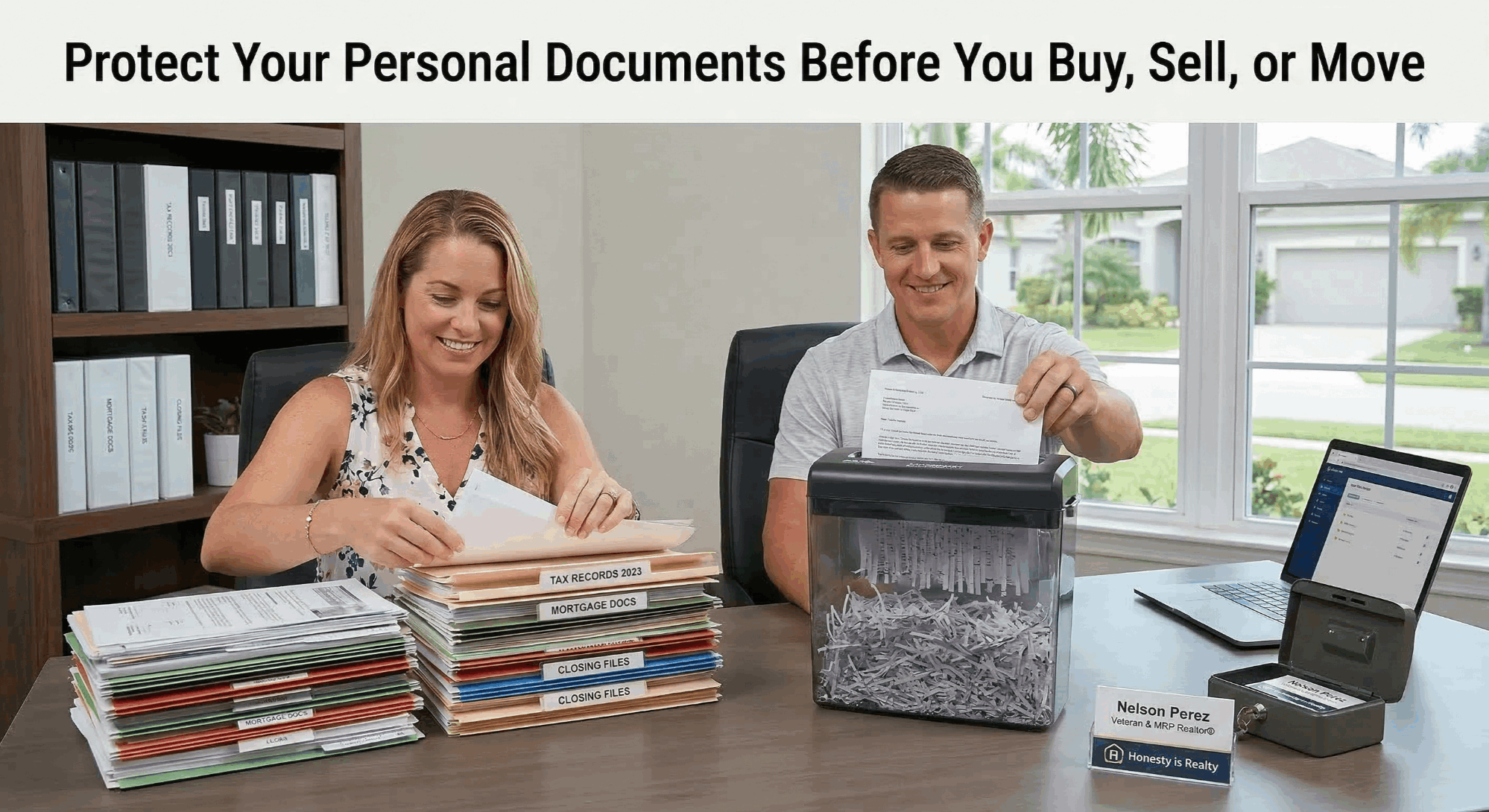
For real estate clients, I would add another category: closing files, loan disclosures, title paperwork, and signed contracts. Some of these should be kept. Some should be secured digitally. Some should be shredded when they are no longer needed.
A Better Way to Organize Your Important Papers
The goal is simple: keep what matters, find it fast, and get rid of the rest safely.
Create Year-by-Year Folders
Use clearly labeled folders for each year. Separate tax records, receipts, mortgage paperwork, insurance documents, and major home improvement records.
That makes life easier during tax season and easier if you need records during a sale, refinance, or audit.
Keep Digital Backups, But Be Smart About It
Digital copies make searching easier and reduce paper clutter. But they need to be stored securely. The FTC recommends keeping sensitive data only as long as there is a legitimate reason to keep it and disposing of it securely afterward.
For homeowners, that means:
Keep Home-Related Records Together
If you own a home, keep these together in one place:
This is especially helpful when you sell, because it keeps important property records from getting mixed in with old tax clutter.
How Long Should You Keep Tax Records?
The IRS says to generally keep records for 3 years from the date you filed the return or 2 years from the date you paid the tax, whichever is later. In some cases, such as underreported income or worthless securities, longer retention periods can apply.
That is why random guesswork is a bad system. Keep a basic retention plan so you know what stays and what goes.
How to Get Rid of Sensitive Documents Safely?
Do not throw tax returns, bank statements, or mortgage paperwork straight into the trash.
Shred, Don’t Toss
The FTC specifically recommends destroying documents with personal information before disposing of them.
For homeowners and sellers, a cross-cut shredder is a smart investment. If you have years of paperwork, use a professional shredding service.
Wipe Digital Files Properly
If you are replacing a computer before or after a move, do not just drag files to the trash folder. The FTC recommends taking steps to remove personal information from devices before getting rid of them.
What Happens If Your Information Is Stolen?
It can turn into a much bigger problem than most people expect.
The IRS says victims of tax-related identity theft may need to respond to IRS notices, verify their identity, or in some cases submit Form 14039, Identity Theft Affidavit. The IRS also provides a process for requesting a copy of a fraudulent return filed using your name and SSN.
That is exactly why secure document handling matters before, during, and after a move.
Final Takeaway
If you are buying, selling, or relocating in Florida, do not let your paperwork become an afterthought.
A move is the perfect time to clean up old files, organize what matters, and safely destroy what you no longer need. That protects your identity, reduces clutter, and makes the next tax season a lot less stressful.
At Honesty Is Realty, I believe smart real estate decisions go beyond the contract. They include the details that protect your money, your time, and your peace of mind.
FAQs
What documents should I shred before a move?
Shred old tax records, bank statements, credit documents, and any paperwork with your Social Security number or account information once you are past the required retention period.
How long should I keep tax records?
The IRS generally recommends keeping records for 3 years from the date you filed, though some situations require longer retention.
Can identity thieves use old mortgage or tax paperwork?
Yes. Tax and financial records can contain enough personal information to support fraud or tax-related identity theft.
Is it better to shred or throw away sensitive papers?
Shredding is safer. The FTC recommends destroying documents with personal information before disposal.
About Me:
Nelson Perez | Veteran & MRP Realtor® in Central Florida (Polk + Osceola)
Nelson Perez is a U.S. Veteran and MRP-certified Realtor® with LPT Realty, based in Davenport, Florida. With 30+ years of construction experience and a straight-shooting negotiation style, he helps buyers, sellers, and investors across Central Florida. Known for clear advice, clean communication, and strategies that protect your money, Nelson serves clients with one core belief: Honesty is reality.
* Getting ready to buy, sell, or relocate in Central Florida? Let’s build a strategy that protects your money and keeps the process clean from start to close.