
- Register
- /
- Sign In
The Secret to a Garden That Keeps Giving All Season Long
by Nelson Perez
The Secret to a Garden That Keeps Giving All Season Long
A good garden does not happen by accident.
It starts with a simple plan, the right layout, and consistent care once everything is in the ground. A lot of homeowners get excited about planting day, then lose momentum once the weather gets hotter and the garden starts demanding more attention.
That is where most gardens fall off.
If you want a garden that keeps producing all season long, you need to keep it simple, stay organized, and build a setup that works with your space instead of against it.
The good news is that you do not need a huge yard or a complicated system to grow something productive. A raised bed, a string grid, decent soil, and steady watering can take you a long way.
Start With a Grid
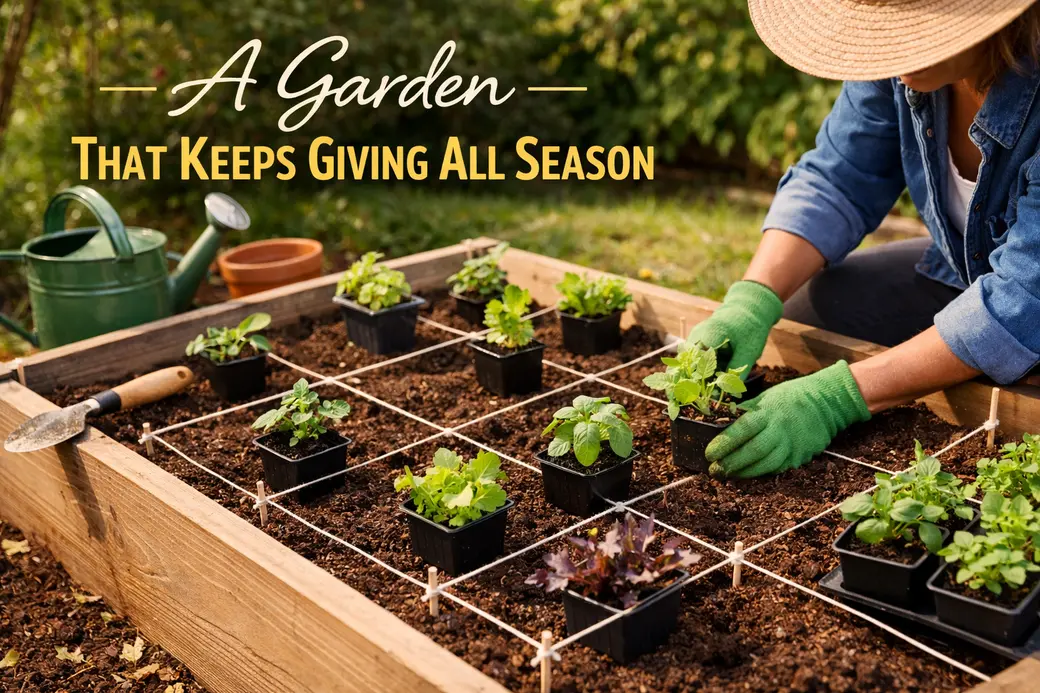
One of the easiest ways to organize a garden bed is to create a grid using string and a measuring tape.
The idea is simple. Divide the garden bed into one-square-foot sections so you can plan where each plant goes before you dig anything. This helps you avoid crowding, wasted space, and random placement that becomes a problem later.
If your bed does not divide evenly, that is fine.
Use the larger squares for plants that need more room to spread, and save the tighter spaces for smaller crops or herbs. That kind of planning matters more than making every section look perfect.
To make the grid, secure a string along the edges of the bed with tape, or tie it around small stakes and place them into the ground. Once the lines are in place, you will have a clear visual layout that makes the rest of the process easier.
Lay Out the Plants Before You Plant Anything
This is one of the smartest steps in the whole process.
Keep your plants in their pots and place them inside the grid before they go into the soil. That gives you a chance to step back and look at the full layout.
You can see what feels balanced, what looks too crowded, and which plants may need to be moved before you commit.
This is where a lot of beginner gardeners save themselves trouble.
It is much easier to move pots around than it is to transplant something later because the spacing did not make sense.
Think about:
- Plant size at maturity
- Sunlight exposure
- How often will you harvest
- Whether taller plants may shade smaller ones
- How easy it will be to water and maintain the bed
A garden should not only look good on planting day. It should still make sense once everything starts growing.
Plant With Room for Roots
Once you are satisfied with the layout, it is time to plant.
Dig holes deep enough to fully cover the root ball with about one inch of soil above it. That gives the plant enough coverage while helping it settle into place.
Before planting, loosen the soil in the area where the roots will grow. This matters more than people think. Roots need space to spread, and compact soil makes it harder for plants to establish themselves.
After setting the plant in place, create a small mound around the root area with a circular channel around it. That shallow ring helps direct water back toward the plant instead of letting it run off too quickly.
It is a simple move, but it makes watering more effective.
Watering Is Where Gardens Are Won or Lost
A lot of people focus on planting and forget that the real work starts after that.
Once the plants are in the soil, observation and consistency matter most. Give the bed a deep soaking right after planting, then stay on a regular watering schedule.
This is not the part to get lazy with.
Every summer brings a stretch of serious heat, and there will be days when your plants need water twice a day. That is normal. Plants will usually warn you before they fail. They start to wilt, droop, or look stressed well before they die.
That is why paying attention matters.
A productive garden usually comes down to one simple question: are you noticing what the plants are telling you?
If you stay consistent, the garden usually responds.
The Best Gardens Are Managed, Not Ignored
People love the idea of a low-maintenance garden, but the truth is that all productive gardens require attention.
That does not mean they have to be complicated.
It means you need to check them regularly, stay ahead of stress, and make small corrections before problems get worse. That includes watering, spacing, soil health, and the overall condition of the plants.
You are not trying to build a perfect garden.
You are trying to build one that stays productive.
That happens when you stay engaged.
Why Soil pH Matters More Than Most People Realize
A lot of homeowners plant vegetables and flowers without ever checking the soil.
That is a mistake.
Soil pH affects how well plants can take in nutrients. If the pH is off, the plant may struggle even if you are watering and feeding it correctly.
The easiest way to check this is with a pH meter.
That tool helps you see whether your soil needs to be more alkaline or more acidic. Once you know where the soil stands, you can make gradual adjustments.
For example, people often add coffee grounds to soil when they want to make it more acidic. The keyword is gradual.
Do not overcorrect.
When adjusting soil pH, make changes in small increments and watch how the soil responds. That gives you better control and helps you avoid creating a new problem while trying to fix the first one.
This applies to both vegetable gardens and flowering plants.
Timing Still Matters
Even the best layout will not save you if you plant too early.
In many regions, mid-to-late May is a solid time to plant a vegetable garden, but timing depends on your local hardiness zone. The most important rule is simple: do not plant outside before the frost season has passed.
That is non-negotiable.
A strong start depends on matching your planting timeline to your climate, not just your excitement.
For homeowners in warmer regions, that planting window may come earlier. For others, waiting a little longer can save the entire season.
A Simple Garden Plan Works Better Than an Overcomplicated One
A lot of beginner gardeners make the same mistake.
They plant too much, too close together, and without a system for maintenance. Then the weather shifts, the watering becomes inconsistent, and the bed becomes harder to manage than expected.
That is why a simple garden setup usually works better.
A clear grid, thoughtful spacing, loose soil, proper watering, and steady observation beat a messy, oversized plan almost every time.
If you want your garden to keep giving all season long, focus less on doing more and more and more on doing the basics well.
Why This Matters for Homeowners
A backyard garden is not just about vegetables.
It is about using your outdoor space better, creating something productive at home, and building habits that make homeownership more rewarding.
You do not need a huge property to do that. A small raised bed can still produce a lot when it is planned well and maintained consistently.
That is the real secret.
Good gardens do not come from luck. They come from structure, patience, and paying attention.
Final Thoughts
If you want a garden that keeps producing all season, start with a layout that makes sense and a maintenance routine you can actually follow.
Create a string grid. Place your plants before you commit. Give roots room to spread. Water consistently. Watch for stress. Adjust your soil carefully. Plant at the right time.
None of that is flashy.
But it works.
And that is what matters.
A productive garden is built on simple habits done well over time.
FAQs
Can I adjust the pH in my garden soil?
Yes. A pH meter can help you determine whether your soil needs to be more acidic or more alkaline. Make adjustments in small increments so you can see how the soil responds.
When is the best time to plant my vegetable garden?
In many regions, mid-to-late May works well, but the right timing depends on your plant hardiness zone. The main goal is to wait until frost season has passed.
Why should I use a string grid in a garden bed?
A grid helps you organize plant spacing, avoid crowding, and plan the layout before anything goes into the ground.
Should I keep plants in their pots before planting?
Yes. Laying them out in their pots first gives you a chance to adjust placement and spacing before you commit.
How often should I water my vegetable garden?
Watering depends on heat, soil, and plant type, but during hot summer periods, some gardens may need watering twice a day. Watch the plants closely for early signs of stress.
* Owning a home is about more than the house itself. It is also about how you use the space around it. A simple, productive garden is one more way to make your home work better for you all season long.
Categories
- All Blogs (92)
- 911 (2)
- April Awareness Days (1)
- buyer (31)
- Central Florida Home Buyers (2)
- Davenport (2)
- florida market (11)
- FSBO (2)
- Home Buying Guides (7)
- Home Maintenance, (6)
- Homeownership (1)
- Knowlege is Power When it comes to todays market (2)
- Military Families (6)
- Personal Finance," "Credit Score," "Money Tips (1)
- Real Estate Market News (8)
- renting (2)
- seller (9)
Recent Posts









MRP Realtor® | Veteran Real Estate Advisor | License ID: SL3558188
+1(954) 418-2463 | nperez@axenrealty.com